

Freelancing has changed dramatically over the past two decades. New platforms, AI tools, and content demands have reshaped how writers work. But according to longtime freelance writer and editor Alex Soto, the most important part hasn’t changed at all: storytelling.
In this freelance writer spotlight, Alex shares how he built a career through relationships and how he approaches AI thoughtfully. He also explains why human experience still matters in great content.
Background: The Highlights

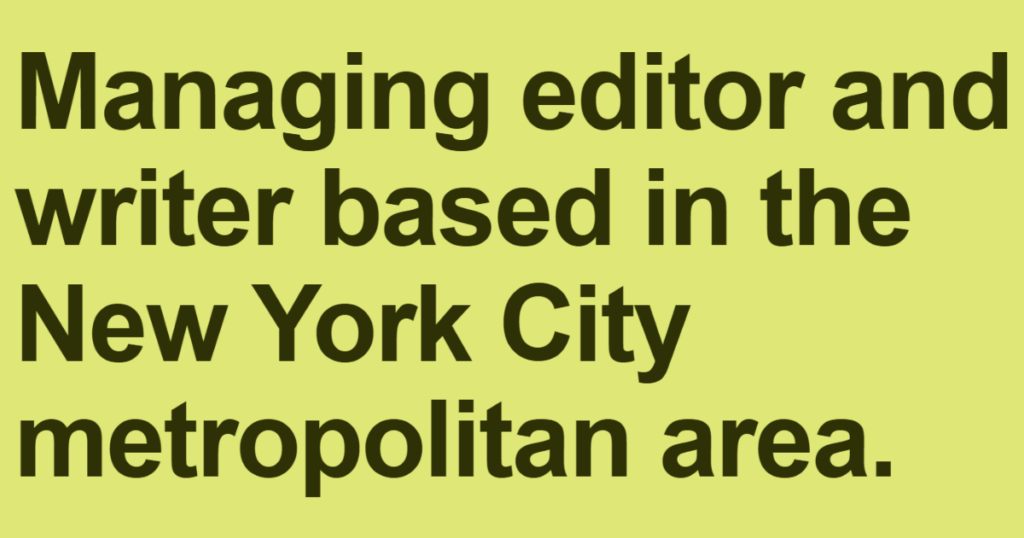
Alex Soto has worked as a freelance writer for over two decades, though his path into the industry wasn’t exactly linear.
He launched his business in 2003, setting up an LLC and preparing to build a career as a freelance writer. However, his first paid article didn’t arrive until 2006, when he published a bylined piece about contact centers for an industry publication.
In the years between, Alex held a range of jobs. He worked at a PR firm, sold shoes at Nordstrom, and even sold vinyl flooring for a U.K.-based company. Those experiences helped him develop business skills and customer awareness that later shaped his approach to freelance work.
One theme has remained consistent throughout his career: relationships matter.
While pitching is part of freelancing, Alex says many of his biggest opportunities have come through professional connections. The article that helped launch his freelance writing career came through a relationship as well.
Today, Alex writes extensively about technology and other specialized topics. His process relies on research, interviewing subject matter experts, and translating complex ideas into compelling stories.
And while tools and platforms continue to change, Alex believes those fundamentals still define great content.
nDash’s Discussion with Alex Soto
 During our conversation with Alex, we explored how freelance writing has changed since the early 2000s. We also discussed what concerns him most about the direction of modern content.
Jenn Greenleaf: You’ve been freelancing for more than 20 years. What genuinely surprises you about how the industry has changed since you started?
Alex Soto: The thing that surprises me the most is that organizations are starting to forget the role of storytelling in content.
Back when I started, you still had to do the research. I wasn’t an expert in contact centers when I wrote my first article. So, I interviewed subject-matter experts and did the research to understand the topic. That hasn’t changed, and it shouldn’t change.
What has changed is the volume of content. If you forget the storytelling element, everything starts sounding the same, which can make your audience feel disconnected and undervalued.
Content still needs to be interesting to humans first. If humans find it interesting, AI will eventually surface it too.
Jenn: What separates thoughtful AI adoption from reactive AI adoption?
Alex: Reactive adoption is when organizations say, “Everyone is using AI, so we should use it too.”
The problem is that without clear frameworks or guardrails, AI content often falls short of the organization’s goals. Teams need to define when and how to use AI. It might technically produce content, but it won’t necessarily align with brand voice, editorial standards, or business objectives.
Thoughtful adoption is different. Instead of changing your entire process to fit the tool, you integrate the tool into the process that already works. The human remains at the center of the workflow.
I firmly believe that writing is thinking. A freelance writer starts interpreting information the moment they begin researching a topic. They continue shaping the narrative all the way through to delivering the final piece. If AI replaces that thinking entirely, you lose something important.
Jenn: Do you think writers should disclose when they use AI during the writing process?
Alex: That’s a difficult question because a lot of writers are already using AI for research, ideation, or brainstorming. However, if 60 to 80 percent of an article is AI-generated, that’s different. In those cases, I think it’s important to disclose that to the client. Transparency matters.
There’s also pressure on freelancers to use AI because the industry moves quickly. Freelancing can be feast or famine, so writers may feel the need to produce more content to stay competitive. At the same time, some clients push for AI because they believe it will save time or money.
But in many cases, editors end up having to revise AI-generated drafts heavily. So the time savings aren’t always real.
Jenn: Do you think writers hesitate to disclose AI use because they’re worried about their reputation?
Alex: I think reputation plays a role. There’s some peer pressure among writers to be part of the “purist” group that writes everything the old-fashioned way.
Many experienced writers take pride in that identity. If you’ve built a reputation as a strong writer over many years, you may hesitate to say you’re using AI. That can be true even if you’re only using it as a tool.
Clients, on the other hand, are often more open to it as long as the final content is good.
The Rest of nDash’s Discussion with Freelance Writer Alex Soto
In his view, the fundamentals of strong writing haven’t changed. Writers still need to research deeply, interview experts, and translate complex ideas for readers. What has changed is the pressure to produce more content faster.
Jenn: Do you think AI-generated content attracts the same level of reader attention as storytelling-driven content?
Alex: I think it’s still too early to say for sure. We don’t have enough data yet.
Right now, everyone is experimenting with AI-generated content. And people are trying to measure its performance with GEO and AEO strategies. Over time, we’ll get clearer answers.
Content that includes real human experiences stands out more.
I like to use the example of eating ice cream on a hot summer day. Everyone knows how to eat ice cream, but when it starts melting quickly, you react in a very human way. Maybe you lean forward so it doesn’t drip, or you rush to finish it before it melts.
Those small experiences are uniquely human. AI can describe them, but it doesn’t truly understand them. And those kinds of details are often what make a story memorable.
Jenn: There’s a lot of discussion about scaling content and producing it faster using AI. In the long run, do you think that could hurt a brand and end up costing them more?
Alex Soto: It could. If everyone is using AI in the same way, your content isn’t going to stand out.
A more thoughtful approach might produce less content. It’s more likely to be effective because it aligns with what the brand is actually trying to achieve. If you’re pushing out content quickly without a framework or clear guardrails, you’ll probably spend more time fixing it later.
The human element still needs to be there. A freelance writer understands how people respond to stories, which is something AI can’t really replicate.
Jenn: As a managing editor, have you noticed when writers start using AI?
Alex: Sometimes you can tell because their writing style changes. If you’ve worked with someone for years, you know their voice. When something suddenly feels different, it raises a question.
But I never accuse writers of using AI. Instead, I approach it the same way I approach any editorial issue. I’ll ask questions about a point of view or why a writer framed a section a certain way.
Most experienced writers understand that if they’re going to use AI, they need to do it intelligently. As long as the content still works and the client doesn’t prohibit AI use, small differences in voice or structure usually aren’t a problem. Editors generally focus on whether the piece works overall.
Advice from a Freelance Writer with Two Decades of Experience
After more than two decades as a freelance writer, Alex has seen plenty of shifts in how content gets created and distributed. New tools will continue to emerge, and workflows will continue to change.
But the fundamentals of good writing haven’t gone anywhere.
Research still matters. Talking to experts still matters. And telling a story that resonates with real people still matters.
Alex’s perspective is a good reminder that technology continues to shape the content creation process. The human element, however, is what ultimately makes content worth reading.
Would you like to work with Alex? Check out his freelance writing portfolio here.