

A content marketing manager can hire content creation services, publish the piece, pay the invoice, and still struggle to prove whether the asset worked. A blog post can bring in traffic from people who were never going to buy. A sales resource can answer buyer questions without showing up as the original conversion. Thought leadership can earn attention and still leave readers with nothing distinct to remember.
That’s where measurement gets messy. The same report can make the wrong asset look successful, the right asset look weak, and the next assignment harder to plan. A stronger measurement plan starts before the writer starts. Each asset needs a defined purpose, a useful success metric, and a clear role in the next decision the team needs to make.
Why Measurement is Critical for Content ROI
We’ve all read a piece that looks finished, only to find it isn’t doing its job. But receiving approval before launch doesn’t prove the content supported a campaign, helped sales answer a buyer’s question, or engaged prospects.
The trouble usually shows up later:
- Blog posts may bring in plenty of traffic, but from readers who don’t match the target audience.
- A how-to guide may answer the question well, then lose readers because there’s no useful next step.
- A thought leadership piece may earn views without giving the brand a point of view readers remember.
- Product-focused landing pages may attract qualified visitors without prompting them to move toward a demo, form fill, or sales conversation.
Weak performance doesn’t always mean the writer missed the mark because the assignment might’ve targeted the wrong search intent. Or, the CTA might be wrong. Sometimes readers need more information before filling out a form. And, distribution may have brought the piece to an audience that doesn’t align with the content’s messaging.
Match Each Content Goal to the Right Performance Metrics
Reporting shouldn’t treat every asset as if it had the same job. That can make useful content look weak and weak content look successful. For example:
- Articles or blog posts can look weak because they didn’t convert, even when you show that they reached the right audience.
- A high-traffic lead-generation page can appear successful even when those visits never translate into qualified leads, sales conversations, or pipeline activity.
Before numbers come in, define what the asset needs to support. One piece may need to introduce the brand to a new audience. And another may need to explain a complex issue or support a sales conversation. Once the purpose is clear, the team can judge the asset by the behavior it was meant to influence. That keeps one strong metric from hiding a weak result.
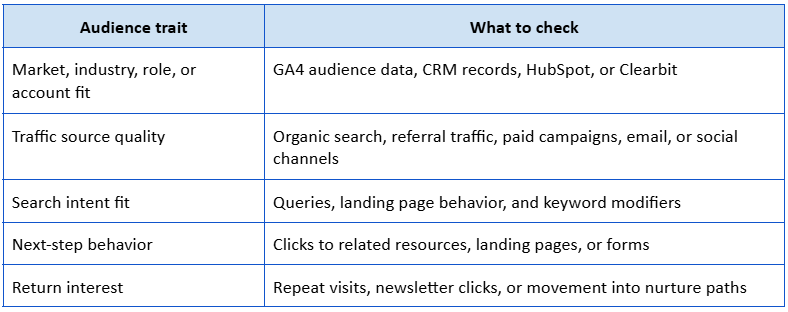
Audience Growth and Qualified Traffic
Identify where visitors came from, which roles or industries they represent, whether they return, and whether they move to related pages. Use the following checkpoints to examine audience and behavior data:
Search Visibility and Keyword Performance
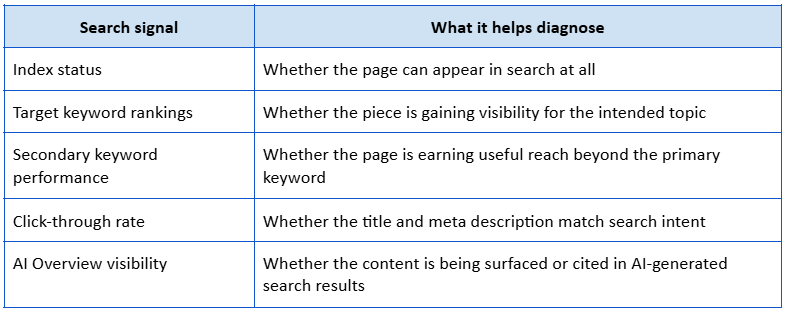
Even if a page ranks well, that doesn’t mean it’ll still bring in the right traffic. The same phrase can attract readers at different stages of the funnel. One person wants a definition, and another wants to compare tools. Someone else is trying to understand the implementation.
That doesn’t mean the page failed. It may be close enough to rank, but not close enough to satisfy the search that brought the reader there. Here are some signals to be aware of:
Engagement and Content Usefulness
Engagement metrics get more useful when they show where the content entered the reader’s mind. A long time on a page doesn’t tell you much by itself. The reader may have found the answer, struggled to find it, or left the tab open while doing something else.
You’ll get a clearer read by looking at what happened before and after the visit.
- Did the reader come back later?
- Did they click into pricing, implementation, proof points, or related resources?
- Did sales use the piece after a call?
- Did the same page keep appearing in conversations where buyers needed help explaining their decision?
Report on the signals indicating the content became useful beyond the pageview. Don’t stop at whether people clicked, scrolled, or stayed on the page. Instead, tie engagement back to the moment where the content became useful.
Conversions, Sales Support, and Revenue Influence
Conversion metrics only make sense when your team knows where the asset fits in the buying process.
- A landing page may need to drive form fills or demo requests.
- A newsletter may only need to earn the next click into a nurture path.
Comparison articles and sales resources serve a slightly different role. They give buyers language they can use to explain the decision, answer internal questions, or keep the conversation moving.
Direct conversions are easier to measure because the action happens on or near the page. Revenue influence is harder to track because a sales resource may support the deal weeks after the first visit. It may help a buyer compare options, answer an internal stakeholder’s question, or move an opportunity through the review process.
Social Media Reach and Conversation Quality
Reach and impressions can help when they come from the audience the brand actually wants to reach. Otherwise, they can make a post look stronger than it is. A post can travel widely without reaching the readers, buyers, or industry voices the asset was meant to influence.
Likes get too much weight in reporting because they show that someone reacted, not why they reacted. For example, they show that someone reacted, but it doesn’t explain why. It also doesn’t tell you whether the post gave them a useful idea or changed how they frame the problem. More importantly, it doesn’t show whether that reaction moved them closer to a real conversation.
Better signals usually show up in what people do with the idea. Here are some examples:
- Comments reveal which part of the topic people wanted to question, challenge, or build on.
- Shares with added context show that someone could connect the point to their own audience.
- Saves can point to practical value, especially when the post gives readers something they may want to revisit.
Clicks and referral traffic still matter because they show whether social attention reached the owned asset. Without that connection, the team may only know that the post got a reaction. They won’t know whether the article reached the people it was written for.
Build a Measurement Plan Before the Content Goes Live
Measurement gets weaker when you wait until after launch to define success. You may still get a clean report with traffic, clicks, downloads, or form fills. What you won’t know is whether those numbers connect to the decision the asset was supposed to support.
- That planning needs to happen before the writer starts, so the brief should make the piece’s job clear. Who is it trying to reach?
- What does that person need from the asset?
- How will the piece reach them?
- What should happen next if the content works?
Those answers give your team a cleaner way to measure performance later. If the asset misses its mark, the discussion can move beyond “it didn’t perform” and focus on what broke down. Your audience may have been wrong, the distribution plan may have been too thin, or the offer might not have matched the reader’s intent.
Define the Content’s Job
A topic can sound focused and still leave your writer guessing. Before the writer starts, the brief should make clear what the reader needs from the piece and what should happen next.
A piece built for early awareness won’t make the same moves as a conversion page. The awareness piece should help buyers name the problem. The conversion page has to give a qualified reader a reason to take the next step. Sales enablement content has a different job again. It needs to help the sales team answer questions that have already surfaced in the buying process.
Those differences should show up in the brief. A writer needs to know what the piece is supposed to help the reader do, not just what topic to cover. Without that direction, the writer may still produce a good piece. It just may not do the job the team needed.
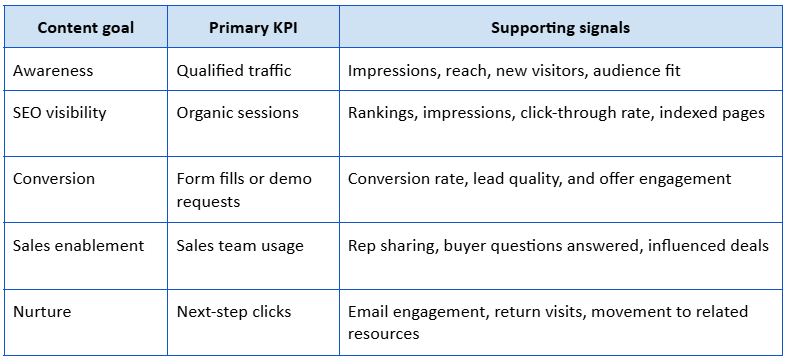
Choose KPIs That Match the Goal
The content brief should explain or show examples of what a successful piece looks like. That way, your writer knows which result matters most and what your team expects to see when they submit drafts.
For example:
Set Up Analytics and Attribution Early
Tracking needs to be in place before the asset goes live. Otherwise, the team may know the content launched, but not which channel drove readers, which actions they took, or whether the asset influenced anything beyond pageviews.
Before launch, the team should know whether the basics are ready. Analytics tools need to be working. UTM parameters need to be assigned. Conversion events should be set up correctly, and CRM tracking should connect where the campaign needs it. If the asset may drive phone inquiries, call tracking needs to be ready as well.
Before results start coming in, everyone should know where to find the dashboard and how the team defines the numbers in it.
That’s especially important when marketing and sales read the same activity differently. A form fill, a qualified lead, and an influenced opportunity may all show up in the report, but they don’t tell the same story. Make those definitions clear before the review starts, so the conversation doesn’t turn into a debate over whose number is “right.”
Then the team can spend the review on the more important questions.
- Did the asset reach the right audience?
- Did the offer fit where the reader was?
- Did the handoff give sales enough to work with?
Create a Review Cadence
First-week performance is mostly a launch check, so avoid spending too much time on this. At this stage, you’re not reading the report’s metrics as performance indicators. Instead, you’re verifying that traffic showed up from the right channels. You’re also confirming that UTMs captured the correct sources and links pointed to where they should. Once your report aligns with the team’s launch plan, compare early results with expectations.
After the first month, the team can start looking at how people find and use the piece. Impressions, rankings, traffic sources, clicks, scroll depth, downloads, email sign-ups, repeat visits, and related-page clicks can all help show whether the asset is gaining traction with the right audience.
By the first-quarter review, you should have enough data to see where the piece sits in the larger path. Look at what readers viewed before they reached it and where they went next. If they keep leaving for unrelated content, the problem may not be the piece itself. It may be pulling in readers who were never a fit for the next step.
SEO content needs more patience than that. A strong piece can take time to gain traction, especially if the site is competing for a difficult keyword or is still building authority around the topic. If the team reviews it too early, they may rewrite or abandon a piece before the search data has had time to settle.
Use Performance Data to Improve Future Content
After the numbers come in, the team still needs to decide what to update, expand, retire, or assign next. That’s where content marketing managers can get more value from content creation services. Instead of asking for another asset on a broad topic, the team can point to what the audience has already shown interest in, where the current content has lost momentum, and which format or channel deserves the next investment.
Identify What Needs to Be Updated, Expanded, or Retired
Older assets don’t all need the same kind of work. A page with high impressions and low click-throughs may not need a rewrite at all. The topic may still have demand, but the search result isn’t giving people enough reason to visit.
Some underperforming content needs more than a refresh. Overlapping articles can compete against each other when they target similar keywords or answer the same buyer question. In that case, consolidation may be more useful than another rewrite.
Retirement should happen more carefully. Before removing a low-performing asset, confirm that it doesn’t serve a strategic, compliance, sales, or support purpose. A page with low organic traffic may still help reps answer customer questions or provide support teams with a reliable reference.
Find Gaps in the Buyer Journey
Performance data can show where readers keep engaging without doing what the team expected next. That’s usually the place to start.
Strong educational traffic with low conversions doesn’t always mean the article failed. The offer may be asking for too much too soon. Someone still trying to understand the problem probably isn’t ready for a demo request. They may need help comparing options, understanding what’s at stake, or figuring out what to read next before they talk to sales.
Later in the process, readers usually don’t need another long-form guide. Instead, they’re looking for content that will help with the question that keeps delaying decisions. Sales can identify what that question is because they hear it after discussions. If related content keeps getting strong engagement, that’s another sign buyers are trying to work through the issue before they’re ready to talk.
Repurpose Strong Assets Into New Formats
Repurposing shouldn’t start with the question, “What else can we turn this into?” It should start with why the original asset worked. A post that earns organic traffic may have answered a search question well, but that doesn’t mean it will work as a LinkedIn carousel, email sequence, or sales follow-up without a different angle.
Repurposing shouldn’t mean pulling the same points into a new template. The team has to understand why the original asset worked in the first place. A webinar question that keeps coming up in sales may have more value as a one-pager than as another blog post. A strong organic post may work better as a nurture email if it gives readers a clear next step. A social post may only need one useful idea from the larger piece.
Strengthen Content with SME Interviews and Audience Research
Performance data can show that a piece isn’t carrying its weight. The next step is figuring out whether the weakness comes from the content itself or from the assumptions behind it.
- Start with the section that isn’t working: Don’t ask broad questions like, “How can we make this better?” Bring the SME or sales team to the specific paragraph, claim, or offer that needs work. You’ll get more useful feedback when the conversation is tied to a real weakness in the draft.
- Ask SMEs where the explanation is too thin: Ask them where the draft feels too thin. They can flag the claim that needs more proof or the explanation that skips a step. A knowledgeable reader may also need more context before accepting the argument. That input helps you strengthen the substance of the piece instead of just adding a quote.
- Use customer language to fix internal phrasing: Buyer language shows you when the draft starts too far downstream. Your team may describe the issue in terms of categories, while customers discuss the issue that prompted them to look for answers. Pull from interviews, surveys, sales notes, reviews, and search queries to see how buyers describe the problem. Then use that language to adjust the opening, examples, or section order so the piece starts where the reader’s problem actually begins.
- Bring sales objections into the content earlier: If sales keep hearing the same concern after prospects read related content, the piece probably isn’t handling that concern soon enough. Moving that answer into the right section can make the content more useful before the reader reaches out.
- Turn inputs into specific revisions: Incorporate research and SME claims to provide extra support to a weak draft. Use this information to change the sentence, section, or offer. Buyer language belongs where the framing misses the mark. And a sales objection belongs at the first point where the reader hesitates. SME feedback should make the explanation more direct.
How Content Creation Services Support Better Results
Content creation services are easier to measure when the partner gets more than a topic and a deadline. A freelance writer doesn’t need Salesforce access to do strong work, but they do need to know what the piece is supposed to accomplish.
A writer trying to earn qualified organic traffic has to think about the query, the structure, and the examples differently from someone creating sales enablement content. Sales content may need to address an objection, explain an internal approval concern, or provide the rep with a proof point they can use in follow-up. A nurture asset has another job. It needs to help the reader take the next useful step, not just cover the topic well.
Turning Strategy Into Measurable Content Assignments
“Write a blog post about content measurement” gives your writer too much room to cover the topic without solving the actual content problem.
Before assigning it, decide what your reader should be able to sort out after reading. They may need to choose which numbers matter, explain performance to leadership, or identify which older assets deserve more work. The brief should make that decision visible so the writer knows what the piece has to help the reader do.
That gives the writer something to build toward. It also gives your team something clearer to judge after publication than whether the piece was well-written or covered the topic.
A stronger brief should include:
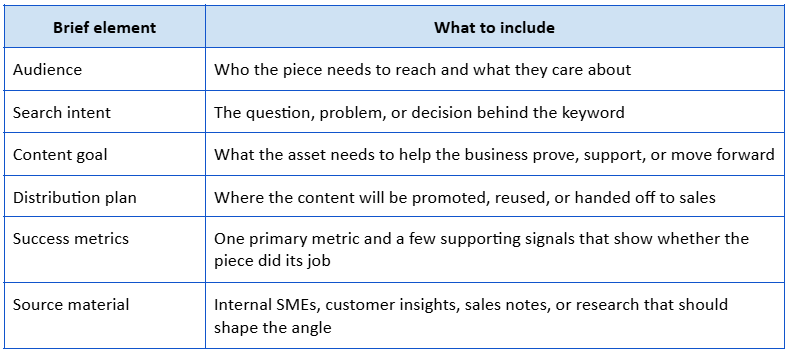
The writer knows which decisions the piece needs to support, and the team can judge the final asset against the assignment instead of relying on personal preference.
Creating Content Built for the Right Channel and Buyer Stage
The same topic shouldn’t become the same asset in every channel. Before you assign the piece, decide where the reader will meet it and what they already know at that point.
A search article has to answer the query clearly enough to earn the visit and keep the reader moving. A sales asset has a different job. It should help the rep explain the issue, address the objection, or give the buyer language they can use in an internal conversation.
Thought leadership needs a sharper point of view. You’re not just explaining the topic. You’re showing how your company sees the issue differently from everyone else writing about it. Email nurture works differently again because the reader already has some context. The piece can usually spend less time explaining the problem and more time helping the reader take the next step.
Improving Content Over Time
Improving content over time doesn’t start with deciding whether the last piece was good or bad. It starts with looking at how people actually used it.
You might have published a search article, then watched sales reps send it to late-stage buyers because one section explained the issue better than your sales deck. Or you may find that the most useful part of a long guide was a small explanation buried halfway down the page. That tells you something important. The next assignment shouldn’t repeat the topic. It should pull that useful part into a stronger asset.
Measurement makes the next brief more specific. You’re not asking your writer to “refresh” a piece or create a follow-up because the calendar needs one. Instead, you’re showing them what the audience responded to, what they skipped, and where the next piece needs more insight.
Make Every Content Investment Easier to Measure
Content gets easier to measure when the team defines the asset’s job before it goes live. A clear brief gives the writer a stronger direction and gives the team a specific result to evaluate after publication. It also makes the next assignment sharper. The team can see whether the issue was the framing, the offer, the next step, or the format, rather than starting over with another loosely defined piece.
Last updated: 5/27/2026